Are you looking for information specific to the Preferred Transit Alternative? Visit the Next Steps page for more details.
What is an Alternatives Analysis?
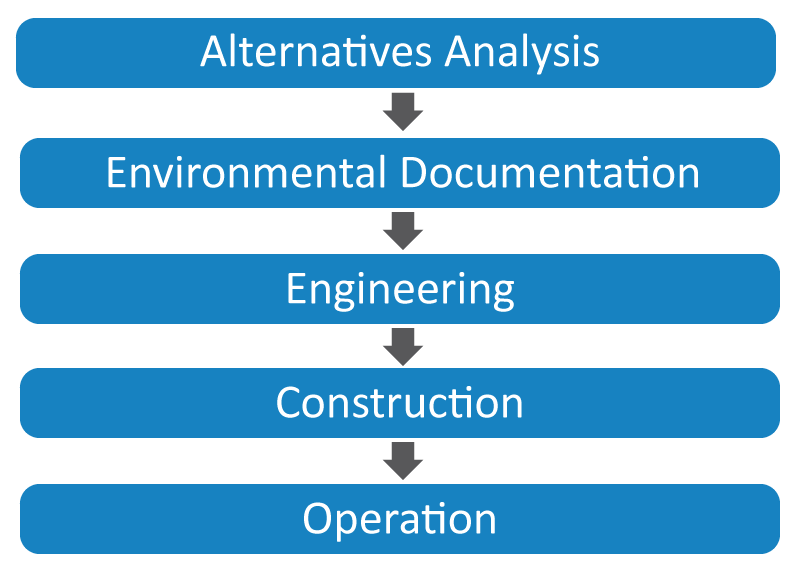
An Alternatives Analysis (AA) is a planning study that follows Federal Transit Administration (FTA) guidelines to develop and evaluate transit alternatives. The AA is the first step in the FTA project development process, which includes planning, environmental, and engineering.
Why are streetcars being studied again?
The previous studies were the result of direct requests to study streetcar alternatives in downtown Omaha. This study has examined a broader range of transit alternatives, including Enhanced Bus Service, Bus Rapid Transit (BRT), and Urban Circulators (modern streetcar) along the entire corridor from Downtown to the Crossroads area. It has followed Federal Transit Administration (FTA) guidelines, which is needed if Federal funding is sought for implementation of the preferred alternative.
What are the potential right-of-way impacts of the project?
Most urban circulator projects such as Modern Streetcar, as well as many BRT systems, operate within the existing street right-of-way. There may be small parcels that need to be acquired for stop locations, turning movements, or a maintenance and storage facilities.
How will the project interface with existing Metro bus service?
The project will be integrated with the existing Metro bus system. How it interfaces with existing Metro bus service will be dependent on the type of transit alternative that is developed. For example, an urban circulator (modern streetcar) alternative could share a travel lane and stops with a local Metro bus route.
How were transit routes identified?
Public input and Initial and Final Screening Criteria were used to narrow route alignments and transit technologies to serve the Central Omaha area. The results of the analysis were presented for public review and input at a public meeting on December 3, 2013.
Why is transit needed in the Central Omaha area?
The Central Omaha Transit Alternatives Analysis will introduce comprehensive urban circulator transit service to connect activity centers and neighborhoods in Central Omaha while tying the regional bus system together to improve mobility and aid employment growth and economic development. The study strives to address the challenges of navigating an under connected corridor by providing a transportation connection between the following districts: Downtown, Midtown, University of Nebraska Medical Center (UNMC), University of Nebraska at Omaha (UNO), and the Crossroads areas. By connecting employment and educational hubs, residential, Shopping areas, civic resources, historic districts, cultural landmarks and entertainment venues in Central Omaha, the proposed alternatives will increase mobility and accessibility for the people who live, work and visit the corridor.
The proposed alternatives will provide better linkages to the regional bus system and connect with key Metro bus routes. The proposed Alternatives will also promote transit use, biking, and walking within the corridor while reducing the need to travel by automobile and decreasing greenhouse gas emissions. They will also provide improved transit service to low to moderate-income populations in Downtown and throughout the study area.
Read the Purpose and Need document for detailed information on existing conditions in the Central Omaha area.
Is improved transit desired in Central Omaha?
In an effort to enhance, connect and activate the downtown core, the Omaha community realized the need for better transit service and in 1995 undertook the first of several feasibility studies to determine the possibility of implementing streetcar in the downtown area. Early results of these studies were positive, but proved to require more research. Development of additional studies, such as the Destination Midtown Master Plan, North Downtown Plan, and the Downtown Omaha Master Plan identified the need to improve transit connections to areas immediately adjacent to the downtown core. Special attention was also paid to the recently adopted Environmental Element of the Omaha Master Plan (2010). Specific goals, strategies, and measurements were adopted therein, to which a transit alternative in this corridor can greatly contribute. Subsequent studies have built on the previous efforts to identify a transit connection extending to Midtown and UNMC, as well as additional connections to the UNO campus, Aksarben Village and Crossroads areas.
For more information, please see the Purpose and Need document for detailed information on previous and ongoing studies in the Central Omaha area.
Why will Enhanced Bus not be considered in the final screening?
After the evaluation of the Initial Screening Criteria, it was determined that the Enhanced Bus transit alternative didn't meet the criteria for ridership or local development goals.
Why will Aksarben Village not be served by the Preferred Transit Alternative?
The removal of the Aksarben Village area from the study occurred following the Initial Screening because it wasn't economically feasible and because the area can be served by other connections within existing the Metro bus system.
Why does the transit alignment terminate at the 72nd and Dodge area?
The transit alignment for this study terminates at the 72nd and Dodge area because the existing Metro transit network travels past the current study area and, if selected, the BRT is expected to be extended to Westroads via Dodge.
How will the route affect existing and future bike lanes?
The project team will consider both current and planned bike lanes during the next phases of the project; no major impacts to bike lanes are anticipated at this point.
What are the next steps after this study?
During Phase 2, route alignments will be further evaluated for environmental impacts, preliminary engineering will be completed and a full funding plan will be developed that includes resources for construction, operation and maintenance. For more information on the next steps, click here.